
Blackout curtains are often seen as the default choice for bedrooms, but they are not the right fit for every room or every sleeper. Dim-out curtains reduce a large share of incoming light without turning the room completely dark, which can make them a more comfortable option in certain situations. Knowing when dim-out fabric is enough, and when full blackout is worth it, helps you choose curtains that suit how the bedroom is actually used.
How Dim-Out and Blackout Curtains Differ
The two fabrics are designed for different levels of light control. Their main differences usually include the following:
- Blackout curtains typically block close to all outside light, often using a coated backing or tightly woven multi-layer fabric.
- Dim-out curtains generally block a large portion of light, commonly cited as around 70 to 90 percent, leaving the room dim rather than dark.
- Blackout fabrics tend to be heavier and stiffer, while dim-out fabrics often drape more softly.
- Dim-out curtains usually allow a little natural light to show the time of day, while blackout curtains hide it almost entirely.
That said, with these differences in mind, the situations below show when dim-out curtains may suit a bedroom better.
Situations Where Dim-Out Curtains Make More Sense
Dim-out curtains work well when complete darkness is not essential or could even be a drawback.
You Prefer Waking Up With Natural Light
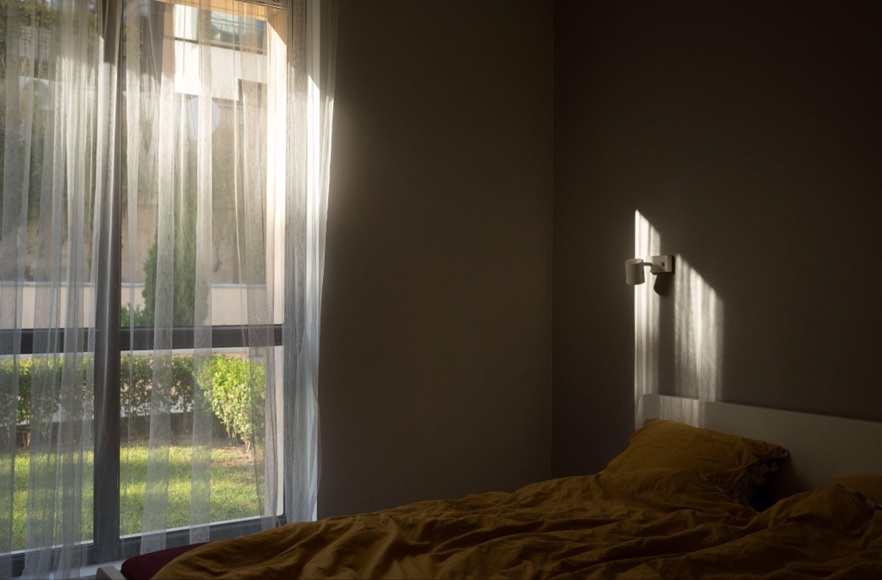
Some people find it easier to wake up when a little daylight enters the room in the morning. Dim-out curtains soften early sunlight without fully blocking it, allowing the room to brighten gradually. This can make mornings feel less abrupt than waking in a pitch-dark room to an alarm.
The Bedroom Is Also Used During the Day
If the bedroom doubles as a reading corner or study area, dim-out curtains allow some light to filter through while still offering privacy. Many homeowners pair them with sheer day curtains in Singapore, where strong daylight is common all year, using the sheers during the day for soft, filtered light and drawing the dim-out layer for a darker, more private room in the evening.
The Room Faces Away From Strong Sunlight
North-facing bedrooms or rooms shaded by nearby buildings or trees often receive gentle light even at midday. In these spaces, dim-out curtains may provide enough darkness for sleep without the added weight and cost of blackout fabric.
A Softer Look Matters
Because dim-out fabrics are often lighter and more flexible, they can drape in fuller, more relaxed folds. They also come in a wider range of textures and lighter colours, which may suit bedrooms with a soft, airy design.
Children Who Feel Uneasy in Complete Darkness
Some young children are more comfortable when the room is not completely dark. Dim-out curtains can create a calm sleeping environment while leaving enough ambient light to ease nighttime anxiety, often without the need for a night light.
When Blackout Curtains Are Still the Better Choice
Blackout curtains remain the more suitable option in certain cases, such as these:
- Shift workers who need to sleep during daylight hours.
- Bedrooms facing direct morning or afternoon sun, or bright street lighting.
- Infants or light sleepers who wake easily with any light.
- Rooms where reducing heat from strong sunlight is a priority.
Some households choose dim-out curtains for most rooms and reserve blackout curtains for the bedrooms that need them most.
Choosing the Right Level of Darkness
Dim-out curtains suit bedrooms where gentle morning light is welcome, sunlight is mild, the room serves several purposes or a softer look is preferred. Blackout curtains remain the stronger choice for daytime sleepers, sun-facing rooms and very light sleepers. Matching the fabric to the room’s exposure and the way it is used helps create a bedroom that feels comfortable at every hour.
Visit De Art Studio’s showroom to compare dim-out and blackout fabrics in person.