

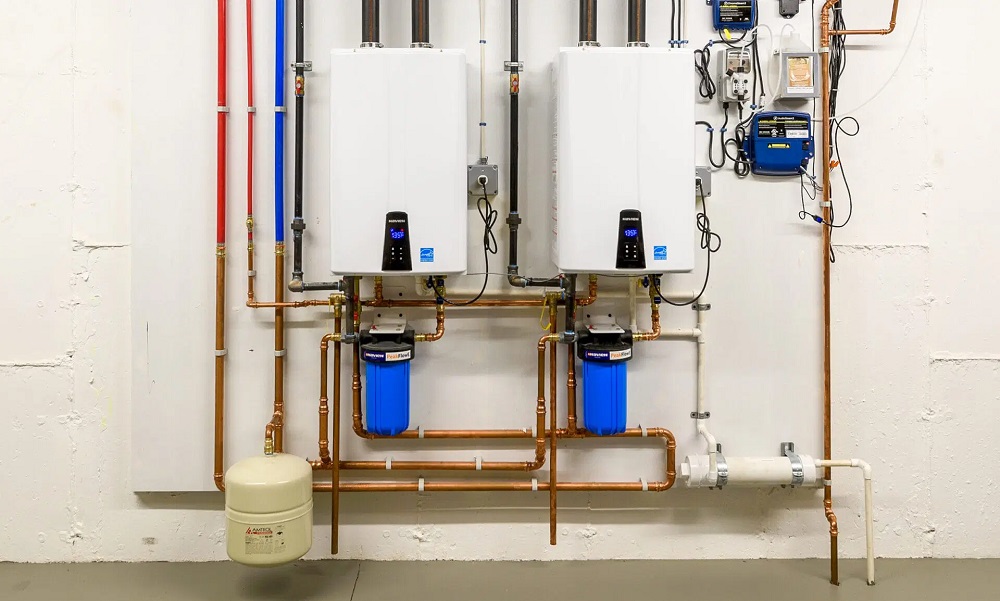
For generations, the standard baseline of residential plumbing infrastructure in the United States has relied on the traditional storage tank water heater. These massive, cylindrical units operate on a simple principle: preheat fifty to eighty gallons of water, store it continuously in an insulated tank, and keep it hot twenty-four hours a day until someone turns on a tap. While functionally adequate, this method is fundamentally inefficient. It forces homeowners to pay for the constant reheating of water that might not be used for hours or even days.
As energy costs rise, environmental awareness deepens, and residential space becomes more premium, the plumbing industry has experienced a massive shift toward tankless water heater systems. Often referred to as on-demand or instantaneous water heaters, these sleek, wall-mounted units completely eliminate the storage tank. By heating water only at the exact millisecond it is requested, tankless systems offer a sophisticated alternative that solves the structural, economic, and logistical limitations of traditional water heating.
The Operational Mechanics: True On-Demand Heating
To appreciate the benefits of a tankless system, one must understand how it operates under real-world conditions. A traditional tank relies on a cycle of standby heating, constantly burning gas or consuming electricity to combat standby heat loss, which occurs as heat escapes through the tank walls over time.
A tankless system remains completely dormant until a hot water valve is opened somewhere in the house. The moment a faucet or shower is turned on, cold water flows into the unit. A flow sensor instantly detects this movement and triggers the heating element, which can be either an electric coil or a high-powered gas burner. The water winds through a heavy-duty heat exchanger, absorbing intense heat rapidly before exiting the unit at the programmed temperature. This process happens in seconds, providing a continuous, immediate stream of hot water without storing a single drop.
Absolute Energy Efficiency and Cost Reduction
The primary driver behind the adoption of tankless water heater technology is the substantial reduction in monthly utility expenses. Because these units completely eliminate standby energy loss, they operate at a much higher level of thermodynamic efficiency.
-
Lower Monthly Utility Bills: According to data from the United States Department of Energy, tankless water heaters can be anywhere from twenty-four to thirty-four percent more energy-efficient than traditional storage tank models in homes that consume moderate amounts of hot water daily. This translates directly into lower monthly natural gas or electricity expenditures.
-
Reduced Carbon Footprint: Because gas-fired tankless units only burn fuel when water is actively moving through the heat exchanger, they produce significantly fewer greenhouse gas emissions over their lifespan compared to a tank that fires up repeatedly throughout the night to maintain storage temperatures.
-
Advanced Modulating Burners: Modern premium tankless units utilize modulating burners that automatically adjust the flame size based on the incoming water temperature and the requested flow rate. If you are only running a single bathroom sink, the unit uses a fraction of its heating capacity, ensuring no energy is wasted.
Infinite Supply: Eradicating the Shared Bathroom Rush
Anyone who has lived in a multi-person household is familiar with the logistical nightmare of the morning shower schedule. Once a traditional fifty-gallon storage tank is drained of its hot water, the household must wait anywhere from forty-five minutes to over an hour for the recovery period, during which the tank slowly fills with cold water and brings it back up to temperature.
-
Endless Hot Water Delivery: Tankless units do not run out of hot water because they do not rely on a limited reservoir. As long as there is electricity or gas supplied to the house and a steady supply of fresh water, the system will continue to generate hot water indefinitely. You can run back-to-back showers, load the washing machine, and operate the dishwasher without the water ever turning cold.
-
Flow Rate Management: It is important to note that while the supply of hot water is infinite, the volume deliverable at any single moment is dictated by the unit’s gallons-per-minute (GPM) rating. Sizing the unit correctly to match your household peak usage ensures that multiple plumbing fixtures can run simultaneously without experiencing a drop in water temperature.
Spatial Liberation and Installation Flexibility
Traditional storage tank water heaters are massive, bulky appliances that require substantial floor footprints. They frequently consume premium real estate in utility closets, basements, or garages, complicating home storage and layout design.
-
Compact Footprint: A typical tankless water heater is roughly the size of a carry-on suitcase, measuring around twenty inches wide by thirty inches high and less than ten inches deep. It is designed to be mounted directly onto a wall studs rather than sitting on the floor.
-
Architectural Versatility: Because they take up no floor space and utilize advanced direct-vent technology, tankless units can be tucked away in spaces where a traditional tank could never fit. They can be installed in pantries, closets, crawlspaces, or even mounted on the exterior wall of the home in moderate climates, freeing up square footage for extra storage, laundry folding stations, or home workshops.
Unmatched Longevity and Safety Horizons
Investing in residential infrastructure requires looking closely at the lifespan and replacement cycles of major appliances. Traditional tanks are structurally destined for failure due to the nature of storing hot water under constant pressure.
Double the Lifespan of Traditional Tanks
A standard storage tank water heater has an expected operational lifespan of roughly eight to twelve years. Over time, the constant presence of standing water corrodes the steel interior lining, eventually leading to structural failure and devastating tank ruptures that flood basements and utility rooms.
Tankless systems, conversely, have an expected operational lifespan of twenty years or more when properly maintained. Because they do not store water, the risk of a catastrophic tank burst is entirely eliminated. Furthermore, every component inside a tankless unit is modular and replaceable, meaning if a single valve or sensor fails after fifteen years, a technician can swap out that specific part rather than junking the entire appliance.
Superior Water Quality and Safety
Water that sits inside a traditional tank for hours can accumulate a layer of sediment, rust, and mineral scale at the bottom of the tank, which can eventually find its way into your bathing or drinking water. Tankless systems heat water dynamically as it passes through clean copper or stainless steel piping, ensuring you always receive fresh, mineral-pure water. Additionally, modern tankless units feature precise digital temperature controls that keep the output within one degree of your setting, virtually eliminating the risk of accidental scalding.
Frequently Asked Questions
What is involved in converting a home from a traditional tank to a tankless system?
Converting a home to a tankless system requires professional retrofitting. Gas-fired tankless units require much higher British Thermal Unit (BTU) inputs than standard tanks to heat water instantly, meaning a technician may need to upgrade your gas supply line to a larger diameter. Additionally, tankless systems utilize specialized stainless steel or PVC concentric venting to handle acidic exhaust gasses safely. For electric conversions, your home main electrical panel may require an upgrade to accommodate the high amperage draw of the heating elements.
Do tankless water heaters require regular maintenance to maintain their warranty?
Yes, tankless water heaters require annual maintenance, particularly in geographic regions with hard water containing high concentrations of calcium and magnesium. As water passes through the intense heat exchanger, these minerals can precipitate out and form a hard scale layer on the internal pipe walls, reducing efficiency and straining the system. Maintenance involves a professional technician connecting a pump kit to flush a food-grade descaling solution or distilled white vinegar through the unit for about an hour to dissolve the mineral scale.
Can a tankless water heater provide instant hot water to a distant faucet?
There is a common misunderstanding that a tankless water heater delivers hot water instantly to the tap. While the unit heats the water instantly, that hot water must still travel through the home existing piping network to reach the open faucet, pushing out the cold water standing in the lines first. To solve this issue and achieve true instant hot water at distant fixtures, homeowners can purchase premium tankless models equipped with integrated recirculation pumps that constantly loop warm water through the main plumbing lines.
How does incoming cold water temperature affect the performance of a tankless system?
The temperature of your regional groundwater heavily dictates the output capacity of a tankless water heater. In cold northern climates, winter groundwater can drop down to forty degrees, requiring the tankless unit to perform a massive temperature rise to reach a comfortable one-hundred-and-twenty-degree output. This extra work reduces the overall flow rate (GPM) the unit can produce simultaneously. In warm southern climates where groundwater stays around seventy degrees, the unit requires far less energy, allowing it to support more simultaneous showers.
Is it possible to install a small tankless water heater directly under a single kitchen sink?
Yes, these are known as point-of-use tankless water heaters. They are compact, low-voltage electric units designed exclusively to service a single fixture, such as a remote kitchen island sink, a detached garage workshop, or an outdoor pool house bathroom. Installing a point-of-use unit eliminates the need to run extensive, expensive hot water plumbing lines all the way from the home primary water heater, providing localized efficiency and immediate hot water delivery.
How do tankless water heaters protect themselves from freezing in extreme winter weather?
Most modern, high-quality tankless water heaters designed for installation in cold climates come equipped with built-in electric freeze-protection heaters. These internal heating blocks automatically activate when the temperature inside the unit drops near freezing, protecting the delicate heat exchanger pipes from cracking. However, for this protection system to operate during a winter storm, the unit must remain continuously plugged into an active electrical power source, making battery backups or surge protectors a smart addition in areas prone to winter power outages.