

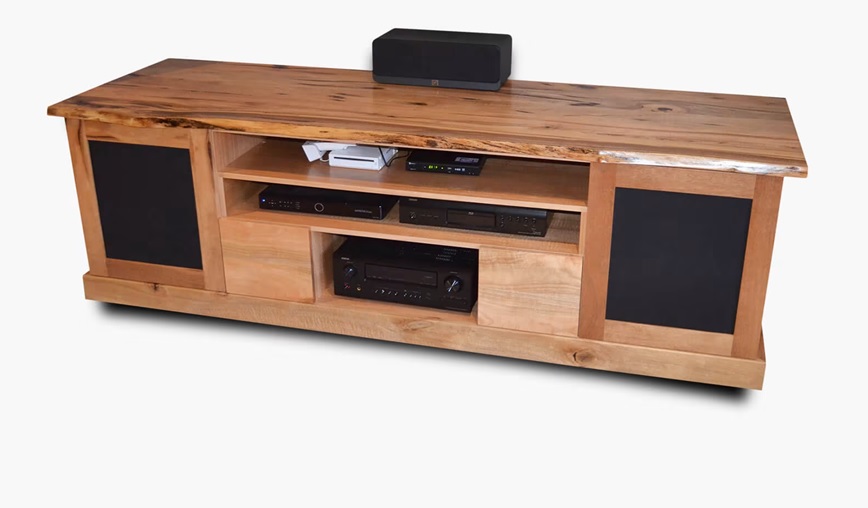
Jarrah has been part of the Western Australian story for a long time. It built the state’s early infrastructure — bridges, railway sleepers, wharves — because it was abundant, extraordinarily hard, and resistant to the kind of decay that defeats lesser timbers. Somewhere along the way, it also found its way into homes, and it’s never really left.
Today, jarrah remains one of Australia’s most sought-after furniture timbers. But the market has changed considerably. There’s more choice than ever, more variation in quality, and more terminology to navigate. If you’re considering jarrah for your home, here’s what’s worth understanding before you commit.
What Makes Jarrah Different From Other Timbers
Jarrah (Eucalyptus marginata) is native to South West Western Australia. It grows slowly — which is part of why it’s so dense — and produces timber with a deep reddish-brown heartwood that darkens and enriches with age and exposure to light.
The density of jarrah is one of its defining characteristics. It rates at around 820 kg/m³, which puts it firmly in the hardwood category and gives finished pieces a satisfying weight and solidity. When you sit at a jarrah dining table or open a jarrah drawer, the material communicates quality in a way that’s hard to manufacture.
Jarrah also has natural resistance to termites and decay, which matters in an Australian context where both are genuine concerns. This durability is why jarrah was trusted in structural applications for over a century — and it’s the same quality that makes well-maintained jarrah furniture a multi-generational investment.
Understanding Timber Grades and What They Mean
Not all jarrah furniture is created equal, and the difference often comes down to the grade of timber used.
Select grade jarrah is taken from the clear, straight sections of the log. It presents with consistent colour and minimal feature — ideal if you prefer a cleaner, more uniform look.
Feature grade jarrah includes natural characteristics: gum veins, grain variation, knots, and colour shifts between heartwood and sapwood. These aren’t defects — they’re the fingerprint of the tree — and many buyers specifically seek them out for the character they add.
Recycled jarrah is another category worth understanding. Western Australia has a significant stock of jarrah recovered from old wharves, bridges, and buildings. This recycled timber is often denser than new-growth jarrah (it was harvested when trees were older and slower-grown), and it carries a visible history in its bolt holes and weathered surfaces. For buyers who want sustainability credentials alongside character, recycled jarrah is a compelling option.
When speaking with a furniture maker, ask specifically which grade you’re looking at and why. A reputable maker will be able to explain the choice and show you examples.
New vs. Recycled vs. Plantation Jarrah
This is one of the more nuanced decisions buyers face. Here’s a straightforward breakdown:
New-growth jarrah comes from sustainably managed forests in WA’s South West. It’s consistent in quality and available in a wider range of dimensions. Most jarrah timber furniture sold by established Australian makers falls into this category.
Recycled jarrah is recovered from demolition sites and old infrastructure. Supply is finite and variable, which affects what shapes and sizes a maker can work with — but the material itself is often exceptional.
Plantation jarrah is a more recent category. Plantation-grown trees mature faster than old-growth, which means the timber can be less dense and show wider grain. It’s generally used in lower-cost furniture and isn’t considered equivalent to old-growth or recycled stock.
Knowing which category your furniture falls into helps set realistic expectations around appearance, price, and long-term performance.
Why Custom Made Matters With Jarrah
Off-the-shelf jarrah furniture exists, but it tends to represent a compromise — standard dimensions, standard finishes, limited choice in timber grade. For a material as distinctive as jarrah, that approach can undersell what the timber is capable of.
Custom made jarrah furniture starts with your space and your requirements. The maker selects slabs or boards that suit the intended piece, discusses finish options with you, and builds to the dimensions that actually fit your room rather than a warehouse’s logistics.
The process takes longer and costs more than purchasing something off a showroom floor. But the result is a piece that fits precisely — in scale, in character, and in the context of your home. It’s also a piece you’ve had some creative input into, which tends to affect how much you value it over time.
When commissioning custom work, be specific about your brief. Bring photos of your space, note the dimensions of the room and any clearances you need to maintain, and discuss your preferences around grain and colour upfront. A good maker will welcome the detail — it helps them do better work.
Buying Jarrah Furniture in Perth: What to Look For
Perth sits at the heart of jarrah country, which means buyers here have access to makers who work closely with the material and understand it deeply. That proximity is worth something.
When evaluating jarrah furniture in Perth, look beyond the finished surface. Ask about the joinery — how the piece is connected at its corners and joints says a lot about its likely longevity. Traditional joinery methods (mortise and tenon, dovetail) hold up significantly better over time than purely mechanical fasteners or adhesive-only construction.
Ask about the finish, too. Penetrating oils enhance the grain and are easy to maintain at home. Lacquers offer more surface protection but are harder to repair if damaged. Neither is categorically better — it depends on the application and your willingness to do periodic maintenance.
And pay attention to how the maker talks about their work. People who care deeply about jarrah tend to be specific and passionate when discussing it. That engagement is usually a reliable indicator of the quality and care that went into the piece.
How to Care for Jarrah Furniture
Jarrah is resilient, but it responds well to appropriate care.
Oil regularly. An oiled jarrah surface benefits from re-oiling every six to twelve months depending on the piece and how much use it gets. Use a quality penetrating oil — tung oil and hard-wax oils are both well suited to jarrah — and apply sparingly with a clean cloth.
Keep it away from direct heat. Like all solid timber, jarrah moves with changes in temperature and humidity. Positioning furniture away from heating vents, fireplaces, and direct sun through glass reduces the risk of cracking or warping.
Address spills promptly. Oiled surfaces aren’t impermeable. Wipe spills quickly, particularly acidic liquids, to prevent staining. For day-to-day cleaning, a lightly damp cloth is all that’s needed.
Don’t fear scratches. Minor surface scratches in an oiled finish can usually be addressed at home with fine sandpaper and a touch of matching oil. This repairability is one of jarrah’s most practical advantages over alternative materials.
Is Jarrah the Right Choice for Your Home?
Jarrah isn’t a neutral material. It has a strong visual presence — that deep, warm reddish-brown — and it works best in homes where the palette and aesthetic can support it. It pairs well with neutral linens, stone benchtops, leather upholstery, and raw materials like rattan and wool. In a very cool-toned, monochromatic space, it can feel at odds with its surroundings.
That said, jarrah doesn’t need to dominate a room. A single statement piece — a dining table, a bed frame, a bookcase — can anchor a space without overwhelming it, particularly if the surrounding palette is kept relatively restrained.
The more important question might be: are you buying furniture for the long term? Jarrah rewards that approach. It’s a material that improves with age, that can be repaired and refinished, and that carries genuine provenance. If you’re thinking about furniture you’ll still be using in twenty years, jarrah makes a serious case for itself.
Frequently Asked Questions
Is jarrah furniture expensive compared to other timber options?
Jarrah sits at the premium end of the Australian timber furniture market, reflecting its density, durability, and the craftsmanship involved in working it. Custom-made pieces will cost more than production furniture, but the longevity and repairability of solid jarrah typically makes it better value over time.
How do I know if jarrah furniture is sustainably sourced?
Ask the maker directly about their timber sourcing. Reputable Australian makers can tell you where their jarrah comes from and whether it’s harvested from managed forests or recovered from recycled sources. Both can be sustainable options when handled responsibly.
Can jarrah furniture be used outdoors?
Jarrah has historically been used in outdoor and semi-exposed structural applications due to its natural durability. However, outdoor jarrah furniture requires more frequent maintenance than indoor pieces — regular oiling and protection from prolonged direct exposure to the elements will significantly extend its life.
How long does jarrah furniture typically last?
Well-made and properly maintained jarrah furniture can last several generations. The timber can be sanded back and refinished multiple times over its life, which is why antique jarrah pieces remain functional and desirable today.
What’s the difference between jarrah and marri furniture?
Both are Western Australian hardwoods, but they differ visually and structurally. Jarrah is denser and presents with a deeper, more uniform reddish-brown colour. Marri tends to be lighter in tone with more pronounced gum veining and grain variation. Jarrah suits buyers who prefer richness and consistency; marri appeals to those who want more visible character and individuality.