
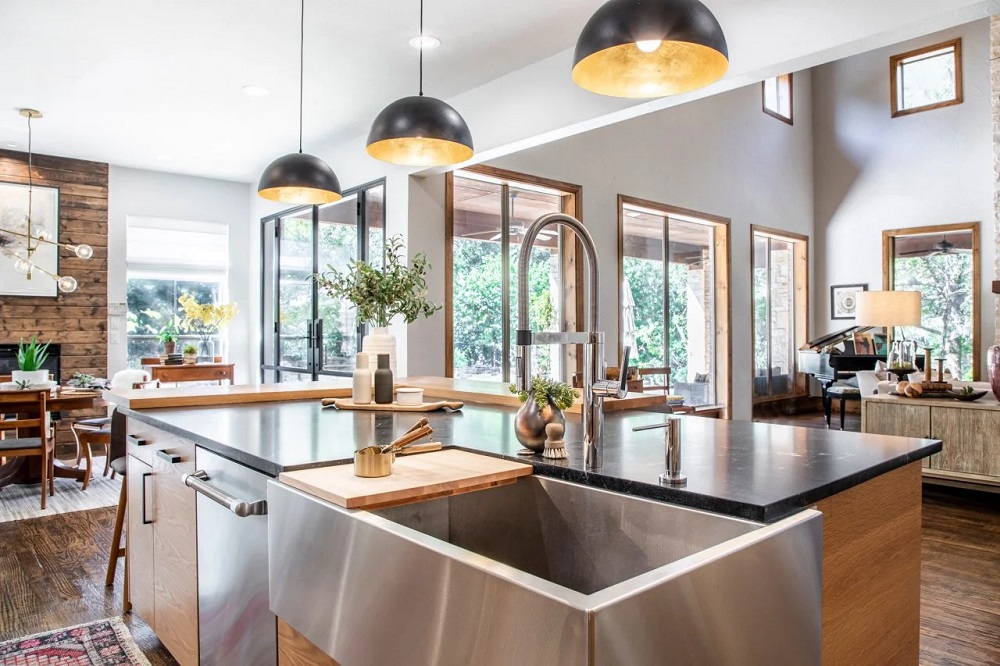
The kitchen is universally recognized as the heart of the home. It is a high-functioning engine room where meals are prepared, family members gather, and guests inevitably congregate during social events. Because of this multi-functional nature, designing a kitchen requires a delicate balance of ergonomics, aesthetics, and structural logic.
When looking through interior design concepts, ideas are often strictly categorized by spatial footprint. Small kitchens are told to focus entirely on space-saving gimmicks, while massive kitchens are encouraged to indulge in sprawling islands and double appliances. However, the most successful kitchen design concepts completely transcend square footage. Certain foundational design principles, spatial configurations, and storage philosophies work with equal efficiency regardless of whether they are deployed in a five-hundred-square-foot urban apartment or a five-thousand-square-foot suburban estate. By focusing on these universal solutions, you can create a kitchen that feels highly efficient, visually cohesive, and effortlessly elegant.
The Ergonomic Blueprint: Perfecting the Functional Flow
The core mechanics of cooking do not change based on the size of the room. Every chef, amateur or professional, moves between storage, preparation, and cooking zones. Designing around this human movement is what separates a frustrating kitchen from a joyful one.
Redefining the Classical Work Triangle
For decades, kitchen design relied heavily on the traditional work triangle, which dictates the spatial relationship between the refrigerator, the sink, and the stove. While still relevant, modern universal kitchens scale this concept into highly defined work zones.
-
The Preparation Zone: This area centers around the sink and trash disposal, requiring expansive, unobstructed counter space. In a small kitchen, this might be a two-foot stretch next to the basin; in a large kitchen, it could span an entire secondary island. The principle remains identical: raw ingredients must flow seamlessly from water source to chopping surface.
-
The Cooking Zone: Centered around the range, oven, or cooktop, this zone requires immediate access to oils, spices, and cooking utensils. Placing deep drawers directly beneath the cooktop for pots and pans eliminates unnecessary steps and searching, maximizing efficiency in any spatial footprint.
-
The Storage Zone: This includes the refrigerator and primary pantry. Grouping these tall units together at the periphery of the layout ensures that loading groceries or retrieving snacks does not interrupt the workflow of the person actively cooking at the stove.
Vertical Mastery: Maximizing Storage Architecture
Storage is the primary battlefield of kitchen design. A lack of structural organization leads to cluttered countertops, which instantly ruins the visual harmony of both small and grand spaces. The universal solution is to fully exploit the vertical plane.
Floor-to-Ceiling Cabinetry
The practice of stopping cabinets twelve to eighteen inches below the ceiling is an inefficient design choice. It creates an awkward, dark gap that collects grease and dust while wasting premium storage space.
-
Visual Continuity: Extending cabinetry completely to the ceiling draws the eye upward, creating an illusion of height that makes a small kitchen feel grander. In a large kitchen, it provides a clean, architectural facade that grounds the room, preventing the walls from feeling empty or fragmented.
-
Seasonal Rotation Storage: The topmost shelves, while inaccessible without a step stool, are the perfect repository for infrequently used items, such as holiday platters, seasonal cookie cutters, or specialized catering equipment. Stashing these items up high frees up prime eye-level real estate for daily dinnerware and cookware.
Deep Drawers Over Lower Cabinets
Standard lower cabinets with traditional swinging doors are highly inefficient. They force the user to bend down, reach into dark recesses, and pull out multiple items just to retrieve a pot hidden at the back.
-
The Pull-Out Revolution: Replacing lower cabinets with deep, heavy-duty drawers is a design choice that works universally. Drawers bring the contents of the cabinet directly out into the light, allowing for instant inventory checks and easy access. Utilizing internal adjustable dividers ensures that lids, glass bowls, and food containers remain perfectly stacked and organized.
Materiality and Visual Cohesion: Creating Timeless Elegance
The visual weight of materials can dramatically alter the perception of a kitchen. Universal design favors selections that promote brightness, cleanliness, and structural durability.
The Power of a Integrated Palette
Using too many contrasting colors and textures fragments a space, making a small kitchen look chaotic and a large kitchen look uncoordinated. A restrained, integrated palette ensures a sophisticated result.
-
Monochromatic Sophistication: Selecting cabinetry that matches or closely aligns with the wall color creates a seamless, built-in appearance. When the cabinetry blends into the architecture, the kitchen feels less intrusive and far more spacious. Warm whites, soft taupes, and muted grays serve as excellent universal bases.
-
Continuous Countertop and Backsplash: Running the exact same material from the countertop straight up the wall as a full-slab backsplash eliminates horizontal visual breaks. This technique creates a clean, luxurious look that highlights the natural veining of quartz, quartzite, or porcelain, providing an uninterrupted canvas that elevates any kitchen size.
Flexible Features: Smart Adaptations for Daily Life
A kitchen must be agile, capable of transitioning from a quiet morning coffee spot to a high-capacity entertaining hub. Integrating flexible, multi-purpose features ensures the kitchen adapts to your changing daily needs.
Strategic Lighting Layering
Good lighting is the ultimate design equalizer. It can make the smallest galley kitchen feel inviting and a massive kitchen feel intimate and focused. A universally functional kitchen relies on three distinct layers of light.
-
Task Lighting: Under-cabinet LED strips are non-negotiable. They eliminate the shadows cast by overhead ambient lighting, directly illuminating the countertop preparation surfaces where knives and hot ingredients are handled.
-
Ambient Lighting: Flush-mount ceiling fixtures or recessed pin lights provide a uniform blanket of illumination across the entire room, ensuring safe movement through the space.
-
Accent Lighting: Pendant lights over an island or inside glass-front display cabinets add personality, depth, and a warm glow that transforms the kitchen into an inviting evening environment.
The Minimalist Handleless Facade
Opting for slab cabinet doors with integrated J-pull handles or touch-latch mechanisms removes physical and visual clutter from the room. In small kitchens, eliminating protruding metal handles prevents clothing from snagging and maximizes walking clearance in narrow aisles. In large kitchens, it delivers a sleek, minimalist aesthetic that mimics high-end European furniture design, keeping the focus entirely on the beauty of the materials.
Frequently Asked Questions
What is the ideal aisle width for a kitchen to ensure comfortable movement?
For a kitchen to function efficiently without feeling cramped, walkways should be a minimum of thirty-six inches wide for single-cook households. If the kitchen frequently accommodates multiple people working simultaneously, an aisle width of forty-two to forty-eight inches is highly recommended. This spacing allows appliance doors to open fully while still leaving enough clearance for another person to walk past comfortably.
How can I integrate a pantry effectively if my home lacks a dedicated pantry closet?
If your architecture does not include a walk-in pantry, the best universal solution is to integrate a dedicated pull-out larder tower directly into your cabinetry layout. A tall, twenty-four-inch-deep cabinet fitted with heavy-duty internal pull-out drawers or a wire shelving system mimics the storage capacity of a traditional pantry closet while occupying a minimal footprint.
Why are quartz countertops considered superior for busy households?
Quartz is an engineered stone composed of roughly ninety percent crushed natural quartz bound together with polymer resins. This manufacturing process creates an entirely non-porous surface. Unlike natural marble or granite, quartz never requires sealing, is highly resistant to staining from acidic liquids like wine or lemon juice, and does not harbor bacteria, making it exceptionally durable and low-maintenance.
Should kitchen appliances be integrated behind cabinet panels or left exposed?
Panel-ready appliances, which allow you to mount matching cabinet faces onto your refrigerator and dishwasher, are excellent for both small and large homes. In small kitchens, hiding the appliances prevents the space from looking chopped up by large sheets of stainless steel. In large kitchens, it creates a clean, continuous wall of cabinetry that looks sophisticated and feels integrated into the home overall style.
How do I choose between a single basin sink and a double basin sink?
A large, deep single-basin sink is universally more functional than a standard double-basin sink. Single basins easily accommodate large baking sheets, oversized pots, and cast-iron skillets that typically do not fit into a split double sink. If separation is needed for washing and rinsing, you can easily place a temporary, removable wash basin inside the single sink, offering maximum flexibility.
What is the advantage of using a counter-depth refrigerator over a standard model?
Standard refrigerators typically stick out several inches past the front edge of standard twenty-four-inch kitchen base cabinets, disrupting the clean sightlines of the room and narrowing walkways. A counter-depth refrigerator is designed to sit virtually flush with your cabinetry boxes, delivering a sleek, custom built-in appearance that maximizes floor space and aesthetic cohesion.