
Roughly four out of five sofas replaced in Singapore homes are replaced for a reason that has nothing to do with the frame underneath them. The fabric’s worn through, the colour no longer fits the room, or a pet has had its way with one corner. None of that means the sofa has failed. It just means the wrong fix has been getting the attention.
Before You Call Either Service
- If the frame still feels solid when you push down on it and nobody’s rearranged the room, reupholstery is usually the faster and cheaper route
- If the shape, size, or configuration is the actual problem, not just the fabric, a custom build solves something reupholstery can’t touch
- Both routes end with a sofa that looks new. Only one of them changes what the sofa actually is
The Frame Test That Decides Everything
Most people who end up booking sofa upholstery in Singapore start from the same place: a sofa that’s structurally sound but looks tired. An heirloom piece, a sofa that’s survived two house moves, or just a frame built well enough that replacing it feels wasteful. The test is simple. Press down hard on the seat and arms. If it feels firm and doesn’t creak or shift, the frame has plenty of life left, and the fabric is the only thing failing.
Five Steps, One Sofa
WTP’s reupholstery process runs through five stages: an assessment of condition and a conversation about fabric, colour, and budget; stripping the old fabric and inspecting the frame for reinforcement; cutting and preparing the new fabric with attention to pattern alignment; replacing the padding and cushion foam, with firmer or plusher options at extra cost; and finally stitching, trimming, and finishing. None of these steps are optional. Skipping the frame inspection is how a reupholstered sofa looks brand new for six months before the same old creak comes back.
Picking a Fabric You Won’t Regret
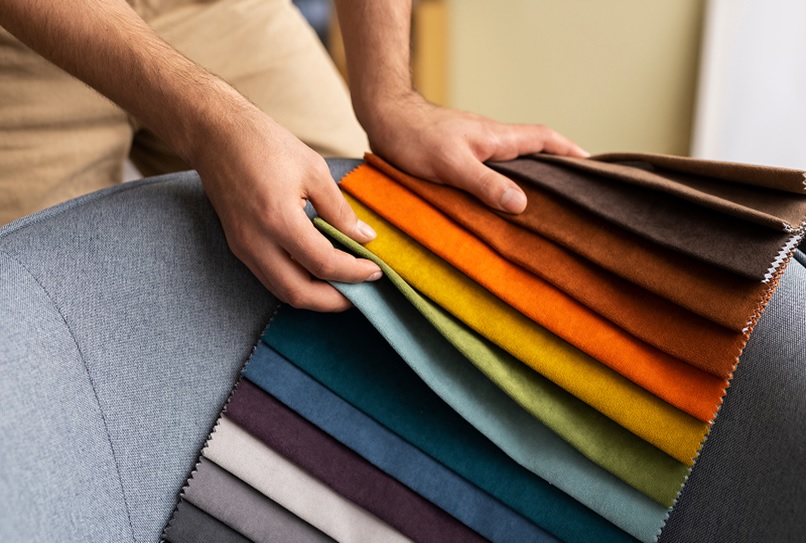
The fabric matters more than people expect, since it changes the maintenance burden as much as the look.
- Performance fabrics (microfiber, FibreGuard, Yarn Pro): stain-resistant and low-maintenance, trading away some of the natural texture a woven fabric gives
- Velvet: rich in colour and texture, but it shows dust and needs more careful upkeep than the other options
- Linen and cotton: breathable and available in a wide colour range, though they wrinkle and may need stain protection applied
- Leather: durable and easy to wipe down, but the costliest option and one that needs periodic conditioning
When the Frame Itself Is the Problem
A customised sofa in Singapore solves a different problem than reupholstery does. Reupholstery assumes the sofa’s shape already works and only the surface needs fixing. It’s a different conversation when the actual problem is the shape itself: a sofa that’s too deep for a smaller living room, an L-shape that doesn’t quite fit the corner it needs to fill, or simply wanting something no showroom carries in that exact configuration. At that point, reupholstery stops being relevant and a custom build becomes the only option that actually solves the problem. The process starts with a consultation covering room dimensions, how the piece will actually be used day to day, and any functional needs that a standard sofa wouldn’t accommodate.
What Four to Eight Weeks Looks Like
After the initial consultation, WTP’s in-house team moves into design and concept development, where sketches get reviewed and refined around materials, finishes, and ergonomics before anything is built. Material selection follows, drawing from solid hardwoods, sustainable veneers, premium upholstery fabrics, leather, and metalwork, with in-house artisans doing the actual construction and quality checks along the way. Delivery and installation, including transport and placement, are included in the project rather than billed separately. Most projects run four to eight weeks from that first consultation to a finished piece arriving at the door, with the exact timeline depending on how complex the design turns out to be.
Who Tends to Choose Which Route
Homeowners dealing with a sentimental or antique piece, or anyone with kids and pets putting a fabric sofa through its paces, usually land on reupholstery first, since it keeps the frame they already know and trust. The custom route tends to draw a different crowd: interior designers sourcing a specific look for a client, developers and businesses furnishing offices or showrooms, and hospitality projects that need seating built to a brief rather than picked off a floor. Neither group is wrong to want what they want. They’re just solving different problems with the same basic material.
Both services are quote-based, since no two sofas (or no two custom builds) cost the same once fabric, size, and finish are factored in. Contact WTP with a few photos of the piece in question, or a rough idea of the shape you’re after, and the team can point you toward whichever route actually fits.